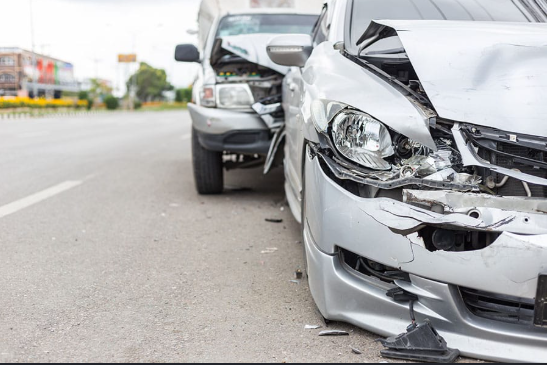
Catastrophic collisions between expensive port equipment can become even more expensive due to the downtime. Dynamic anti-collision systems can mitigate this expensive downtime by protecting massive ship loaders and safeguarding your valuable maritime infrastructure.
Key Takeaways
- Multi-plane laser scanners that can scan boats in real-time enable you to create protective zones around moving booms, ensuring dynamic three-dimensional protection.
- Heavy-duty encoders and 3D scanners work together to provide accurate position information when slewing, luffing, and travelling to ensure synchronized precision.
- Industrial hydraulic buffers serve as important emergency back-up systems that safely absorb the kinetic energy produced during an emergency stop.
- Modern Ship Loader Anti-Collision systems use weather-resistant sensors and autonomous support to allow reliable collision detection even during rain, fog, and dust. This enables fully remote and automated bulk material handling.
Ship-loading operations face billions of dollars’ worth of risk due to ship-to-shore machinery colliding with vessels. By incorporating dynamic laser scanning technology and high-precision positioning systems, physical damage can be mitigated, thereby reducing/delaying operational downtime, ensuring that your port equipment can continue to function safely regardless of weather conditions.
What Are The Operational Challenges Of Modern Terminals?
Ports are intricate, fast-moving environments that involve massive equipment being moved in proximity to one another. Port equipment like ship loaders, stacker-reclaimers, and ship-to-shore cranes collectively transport thousands of tons of dry bulk product every hour. Under these extreme conditions, dust, extreme winds, fog, and rain can cause the operator to have limited visibility.
A collision between the boom of a ship loader and either the successor or hatch corners of a vessel could potentially result in structural damage on an enormous scale. Additionally, such accidents can create extended periods of shutdown at terminals, which negatively impact supply chains globally. To protect against human error, it is necessary for ports to use high-precision sensors integrated with heavy-duty mechanical safeties.
- Environmental Risks: Dust, high wind, heavy rain, and limited visibility
- Operational Risks: Fast travel, complex hatch profiles, and human fatigue
How Do Ship Loader Anti-Collision Systems Work?
To prevent structural accidents, businesses must move away from using basic static limit switches and toward using fully dynamic, or real-time, detection systems. Modern ship loader anti-collision technologies use multi-plane laser scanners, which are built directly onto the loader’s boom. The laser sensors provide continuous scanning of the work area, providing a real-time, three-dimensional profile of the deck of the ship, as well as any hatch covers and other structures around it.
The ship loader anti-collision system continuously compares the machinery’s active sensor data to high-precision positioning data, as the machinery is travelling in long travel, slewing, or luffing modes. As a result, the software allows a protective boundary to be established around the loader’s boom, and if any object enters within this boundary, an immediate warning signal will activate the automation system to slow down any operation that might be critical to avoid a collision or to execute a safe emergency stop before any impact occurs.
How Do Sensors Work With Mechanical Components To Ensure Complete Protection?
Electronic sensors provide the first line of defense, but heavy-duty mechanical components ensure total system safety. Rotary encoders monitor the exact angular position and speed of the machinery, feeding precise digital data to the control PLC in under 100ms. The control PLC uses the information gathered by these sensors to immediately adjust the operating margin of each piece of equipment to prevent an accident or incident.
In the event of an emergency stop, the kinetic energy associated with the movement of the equipment must be safely absorbed. Certified hydraulic buffers located at the ends of the runway provide a means by which to protect both the port equipment and the structure of the dock from physical damage as a result of the emergency stop. The buffers dissipate the energy associated with the impact of the equipment coming to an emergency stop in a smooth manner, preventing sudden, sharp decelerations which could bend the steel girders and potentially injure operators who are on the equipment when it comes to a stop.
| Safety Layer | Primary Component | Functional Role |
| Active Sensing | Multi-Plane 3D Laser Scanners | Continuous obstacle mapping and warning zone monitoring. |
| Position Tracking | Heavy-Duty Rotary Encoders | Real-time position, speed, and angle synchronization. |
| Mechanical Energy Absorption | Industrial Hydraulic Buffers | Shock absorption and structural protection at end stops. |
Table: Integrating Sensors With Mechanical Protection
Final Thoughts: Partner With A Top-Tier Company For Complete Port Safety
Safeguarding heavy port equipment requires robust, industrial-grade technology that can withstand the extreme environments of ports in Australia and around the world. To ensure the advanced safety of your port operations, partner with a company that combines engineering heritage with advanced sensor systems and mechanical safety accessories.
See also: 3D Printing in Tech: More Than Just Prototypes
Ready To Protect Your Port Equipment From Collision Risks?
Get high-end Ship Loader Anti-Collision for your port operations today and ensure complete protection of your assets. By consulting with an engineering specialist, you will have access to a customized anti-collision system to prevent expensive machinery downtime and collision risks!