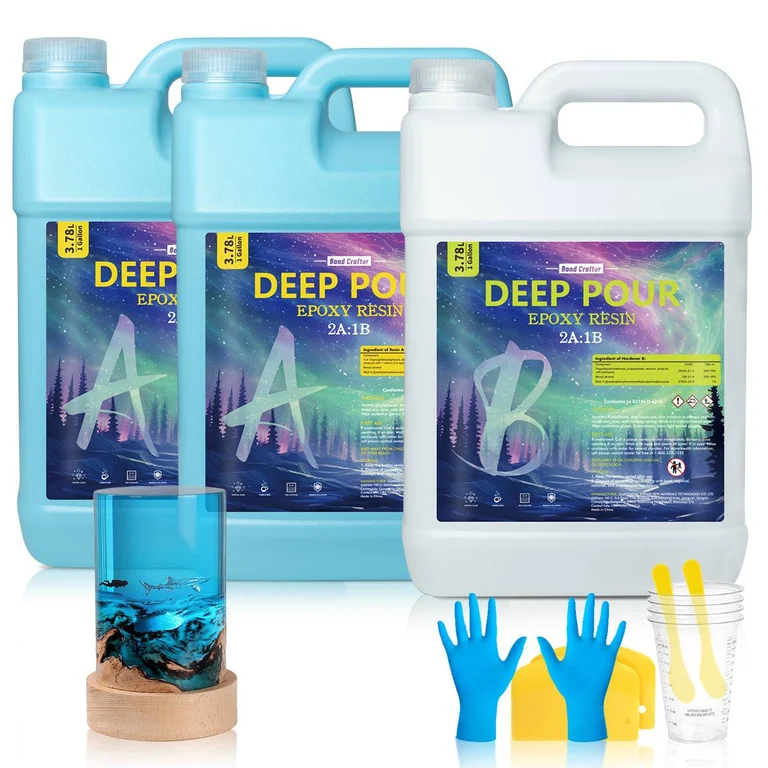
The world of resin artistry and woodworking has been transformed by the availability of deep pour epoxy, a specialized material that enables creators to tackle ambitious projects that were previously impossible with standard formulations. The deep pour epoxy allows for thick, single-pour castings that capture the imagination and bring creative visions to life, from breathtaking river tables and ocean-inspired wall art to functional countertops and sculptural pieces. The success of these large-scale projects, however, depends on careful planning, proper material selection, and a thorough understanding of the unique characteristics of deep pour epoxy. The industry has responded to growing demand with a range of formulations, with some systems capable of pours up to 4 inches thick, offering greater flexibility and fewer limitations for ambitious projects. Understanding the project planning process, environmental considerations, and advanced techniques of deep pour epoxy is essential for woodworkers, artists, and DIY enthusiasts who want to create stunning, professional-quality pieces that stand the test of time.
The Project Planning and Material Estimation Process
The successful execution of any deep pour epoxy project begins with careful planning and accurate material estimation, because underestimating the required volume can lead to costly delays and color matching challenges. The calculation of the required volume of epoxy involves measuring the length, width, and depth of the project, with the total volume determined by multiplying these dimensions and converting to the appropriate units. The use of online calculators and manufacturer resources simplifies this process, providing accurate estimates based on the specific gravity and coverage rates of the chosen deep pour epoxy product. The addition of a safety margin of 10 to 20 percent accounts for variations in surface texture, absorption into porous materials, and the potential for spillage or waste during mixing and pouring. The consideration of multiple pours, where layered casting may be necessary to achieve the desired depth, requires separate volume calculations for each layer and careful planning of the timing between pours. The selection of the appropriate deep pour epoxy formulation depends on the maximum thickness of the casting, the required working time, and the desired clarity and UV resistance. The thorough planning and material estimation process ensures that the project proceeds smoothly without unexpected interruptions or material shortages.
The Environmental Factors That Affect Curing and Clarity
The environmental conditions in which a deep pour epoxy project is executed have a significant impact on the curing process, final clarity, and overall success, making careful attention to temperature, humidity, and workspace conditions essential. The ambient temperature of the workspace must be maintained within the manufacturer’s recommended range, typically between 70°F and 80°F, because temperatures that are too low can result in incomplete curing, while temperatures that are too high can accelerate the exothermic reaction and increase the risk of thermal damage. The humidity level of the workspace can affect the surface finish and clarity of the deep pour epoxy, with high humidity potentially causing blushing or cloudiness on the surface of the curing casting. The presence of dust and airborne particles in the workspace can become trapped in the epoxy and create imperfections, making a clean, controlled environment essential for professional results. Some experienced users recommend pouring during cooler periods of the day or using fans to circulate air and dissipate heat from large castings, preventing overheating and flash curing. The integration of a temperature monitoring system, such as an infrared thermometer, enables real-time tracking of the epoxy temperature during the critical curing period, allowing for early intervention if temperatures approach dangerous levels. The careful management of environmental factors ensures that the deep pour epoxy cures properly, achieving the clarity, strength, and durability that the project demands.
The Troubleshooting of Common Issues in Deep Pour Projects
Even with careful preparation and execution, deep pour epoxy projects can encounter issues that require troubleshooting and corrective action, because the complexity of large castings increases the potential for problems. The formation of bubbles is one of the most common issues in deep pour projects, with bubbles often originating from outgassing of porous materials, trapped air during mixing, or the release of dissolved gases during the curing process. The application of heat from a propane torch or heat gun immediately after pouring helps to release surface bubbles, while deeper bubbles may require a more aggressive approach such as vacuum degassing or pressure casting. The cloudiness or haziness in the finished casting can result from incomplete mixing of the resin and hardener, moisture contamination, or curing at temperatures outside the recommended range, requiring careful attention to mixing technique and environmental control. The thermal cracking or excessive heat generation can occur in large mass pours, particularly when the deep pour epoxy is poured in depths that exceed the manufacturer’s recommendations, highlighting the importance of respecting maximum pour depth specifications. The tacky or soft spots in the cured casting typically indicate incomplete mixing of the resin and hardener, or curing at temperatures that are too low, and may require sanding and recoating to achieve a satisfactory finish. The discoloration or yellowing of the deep pour epoxy over time can be mitigated by the selection of UV-stabilized formulations and the application of UV-blocking topcoats for projects that will be exposed to sunlight. The troubleshooting of common issues in deep pour projects requires patience, careful observation, and a willingness to learn from experience, ensuring that each project improves on the last.
See also: Maximizing Business Performance With Financial Forecasting 3802406326
The Advanced Techniques for Creating Stunning Visual Effects
The versatility of deep pour epoxy enables the creation of stunning visual effects that capture the imagination and elevate projects from functional objects to works of art, with advanced techniques that range from color blending and pigment manipulation to embedding and texturing. The creation of ocean and water effects is one of the most popular applications of deep pour epoxy, with artisans layering translucent tints, white highlights, and carefully positioned pigment to mimic the movement and depth of water. The integration of crushed glass, glitter, and metallic pigments adds sparkle and visual interest, creating shimmering surfaces that catch and reflect light in captivating ways. The embedding of natural materials, including stones, shells, leaves, and driftwood, creates fascinating compositions within the deep pour epoxy, with each embedded object adding texture and story to the finished piece. The creation of geode and crystal effects involves the strategic placement of crushed stone, glass, and pigment, with the deep pour epoxy flowing around these materials and highlighting their natural beauty. The texturing of the epoxy surface with heat guns, torches, or specialized tools creates three-dimensional effects, from rippling water surfaces to organic, flowing textures that add depth and character. The layering of multiple pours with different colors and techniques enables the creation of complex compositions that would be impossible to achieve in a single pour, with each layer building on the last to create visual depth and complexity. The mastery of these advanced techniques transforms the deep pour epoxy from a simple material into a medium for artistic expression, limited only by the imagination of the creator.