This Isn’t Vancouver — Material Choice Matters Here
Picking a roofing material in most of Canada is a relatively straightforward decision. Pick something that looks nice, fits the budget, and handles some rain. In Alberta, the calculation is completely different. Our winters bring prolonged heavy snow loads. Hailstorms roll through every summer with the regularity of a bus schedule. Chinook winds push temperatures up and down 25 degrees in a single afternoon. Whatever you put on your roof needs to survive all of that, repeatedly, for decades.
I’ve seen brand-new roofs fail in under five years because someone chose the cheapest builder-grade shingle and called it a day. I’ve also seen well-chosen roofs hold up for 30 years with barely a repair. The material makes the difference, and in this climate, cutting corners on product selection is one of the most expensive mistakes a homeowner can make.
Asphalt Shingles — Still the Most Popular, But Grade Matters
Asphalt shingles dominate the residential market in Alberta, and there are good reasons for that. They’re widely available, every qualified roofer knows how to install them, and they come in more colours and styles than you could look through in an afternoon. The pricing is accessible, and a well-installed asphalt roof gives you solid performance for 25 to 30 years in this climate.
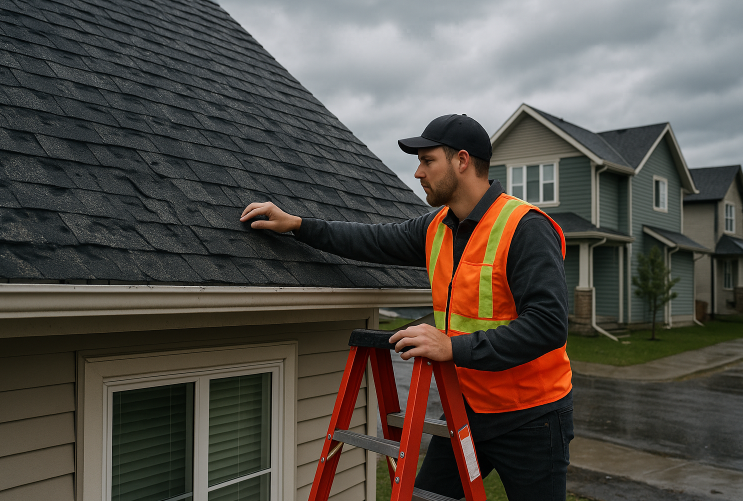
The critical word there is “well-installed,” and the critical distinction is which asphalt shingle you’re talking about. The old flat three-tab style — the kind that looks like uniform rows of rectangular tabs — is the budget option. It does the job. But architectural shingles (also called dimensional or laminate) are a significant step up. They’re thicker, heavier, more wind-resistant, and they hold up better against the thermal cycling that chews through roofing products in Calgary.
Within the architectural category, the real dividing line for Alberta homeowners is impact resistance. Class 4 rated shingles are tested by dropping a two-inch steel ball onto them from 20 feet. Products that don’t crack earn the Class 4 designation, and they’re dramatically more resilient against hail. CertainTeed, GAF, IKO, and Malarkey all manufacture Class 4 options. The cost premium over standard architectural shingles runs about 10 to 20 percent, and in a province where hail damage claims are practically a rite of passage, that premium is one of the better investments you can make. Some Alberta insurers even discount your premiums for having a verified Class 4 installation.
See also: How Behavioural Therapy Helps Children with Conduct Disorder Improve Their Behaviour
Metal Roofing — The Long Game That’s Finally Catching On
Metal roofing has been gaining serious traction in Alberta over the past decade, and the enthusiasm is deserved. Steel and aluminum panels shed snow effortlessly. They don’t absorb moisture, so the freeze-thaw cycle that destroys asphalt shingles barely registers. Wind ratings on quality metal products exceed anything our Chinooks can produce. And the lifespan is stunning — 40 to 60 years from a well-installed metal roof, with minimal maintenance along the way.
The trade-off is upfront cost. A metal roof typically runs two to three times the price of an asphalt installation. That’s a significant number, and it’s the reason most homeowners still default to shingles. But if you plan to stay in your home long-term — ten years or more — the economics flip. You avoid at least one full shingle replacement cycle, you spend far less on maintenance and repairs, and your energy bills may drop because metal reflects solar heat more effectively than asphalt absorbs it.
Standing seam metal is the premium tier, and it’s arguably the best-performing roof you can put on an Alberta home. The panels connect via raised seams that lock together without exposed fasteners. No screws means nothing to work loose as the metal expands and contracts through temperature swings — a major advantage in a climate that cycles between minus 30 and plus 35 over the course of a year. Standing seam also accommodates solar panel installation beautifully, since panels mount with clamps that grip the seams without penetrating the roof surface.
Synthetic Roofing — The New Kid With Serious Credentials
Composite synthetic roofing materials are the newest entrant to the Alberta market, and they’ve gotten good enough to deserve real consideration. Made from engineered rubber and plastic polymers, the best synthetics are nearly indistinguishable from natural slate or cedar shake in appearance. But unlike the real thing, they flex instead of cracking in extreme cold. They handle impact well. And they don’t carry the fire risk or intensive maintenance demands of natural wood products.
Some synthetic products carry warranties of 50 years, which puts them in the same longevity conversation as metal. The pricing lands somewhere between premium asphalt and metal — significant, but not outrageous for what you get. For homeowners who want the character of natural materials without the trade-offs, synthetics are worth investigating closely.
Cedar Shake — Beautiful, High-Maintenance, and Controversial
Cedar shake is the romantic choice. That thick, textured, natural-wood look gives homes real character, and it ages into a silvery patina that’s genuinely beautiful on the right house. Cedar also insulates better than asphalt, providing a small but real thermal advantage.
The other side of that coin is maintenance. Cedar needs regular cleaning to prevent moss and algae growth. It requires periodic staining or treatment to maintain water resistance. And critically in Alberta’s dry-summer climate, untreated cedar is a legitimate fire risk. Some municipalities in fire-prone areas have restricted or banned its use — check local bylaws before committing.
Budget for ongoing upkeep every three to five years. Neglect a cedar roof and it deteriorates fast — the wood splits, moisture gets in, and the beautiful aging effect turns into the ugly rotting effect. Cedar isn’t a set-it-and-forget-it material. If you’re not willing to maintain it actively, you’ll end up replacing it sooner than the shingle alternative you could have installed for less money upfront.
Concrete and Clay Tile — Stunning But Impractical for Most Alberta Homes
Tile roofs show up occasionally on higher-end builds going for a Mediterranean or European look. They’re undeniably attractive, extremely durable in mild climates, and virtually fireproof. In Alberta, they present real challenges.
The primary concern is weight. Concrete and clay tiles are substantially heavier than any other residential roofing material. Most standard roof framing isn’t designed to carry that load, which means structural reinforcement before installation — an expensive addition to an already expensive product. The secondary concern is our freeze-thaw cycle. Water that gets into micro-pores in the tile material expands when it freezes, and over many cycles, cracking occurs. Tile manufacturers have improved freeze-thaw resistance significantly, but Alberta’s thermal extremes still push these products harder than they were optimized for.
For the right home with the right budget and the right structural support, tile can work. For most Alberta residential properties, there are better options that deliver more value for less hassle.
Don’t Forget What’s Under the Shingles
Whatever material you choose for the surface, the components underneath it make or break long-term performance. Modern synthetic underlayment is a meaningful upgrade over the old asphalt-saturated felt paper that was standard for decades — it’s tougher, more water-resistant, and better at allowing moisture vapour to escape from the attic. Ice and water shield along the eaves, in valleys, and around penetrations is non-negotiable in Alberta. Proper flashing technique at every joint and transition point is critical. And adequate attic ventilation — soffit intake and ridge exhaust working together — extends the life of any roofing material by reducing heat buildup and moisture accumulation from below.
The best shingle in the world will fail prematurely if it’s sitting on inadequate underlayment with poor ventilation and sloppy flashing. Installation quality and system design matter as much as the product itself.
Match the Material to Your Situation
Think about your specific circumstances. How long do you plan to stay in the home? A family putting down permanent roots benefits from the long-term economics of metal or premium synthetics. Someone planning to sell in five years gets the best return from high-quality architectural shingles that look sharp and pass inspection cleanly.
Consider your neighbourhood’s exposure. Homes at higher elevations or on open terrain take more wind, making uplift resistance critical. Properties near mature trees face more debris impact. South-facing slopes get hammered by UV all summer. The right material for your house isn’t necessarily the right material for your neighbour’s.
Talk to a local contractor who works with multiple material types. Someone who only installs asphalt is naturally going to recommend asphalt. You want advice from a roofer who can honestly compare the trade-offs across product categories and match the right solution to your home, your budget, and your priorities. That conversation is where the best decisions get made.