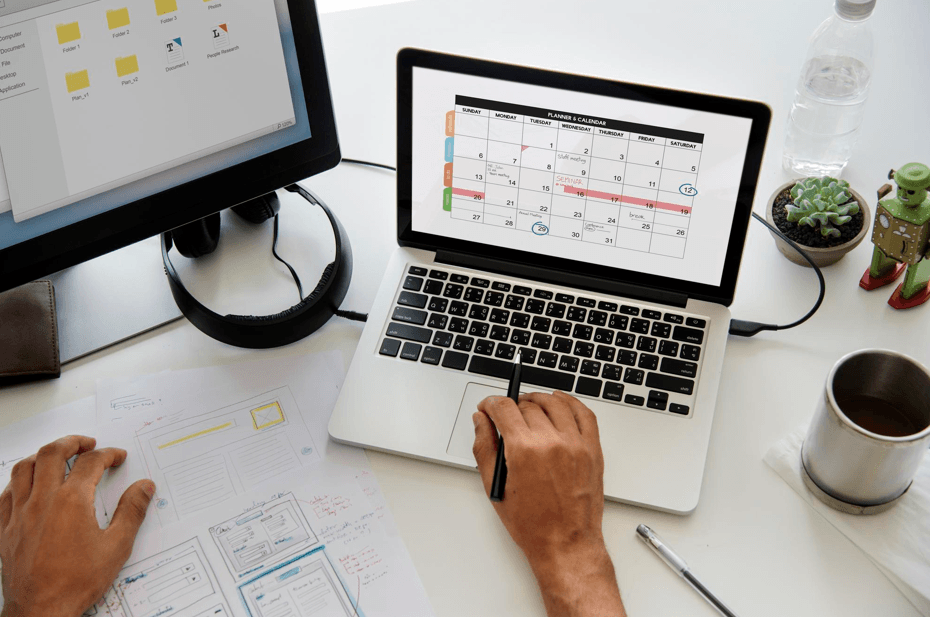
Are static GANTT charts still sufficient for complex modern construction projects? Discover how professional CPM baseline schedule development assists a construction project in eliminating delays, avoiding budget overshoots, and ensuring project success.
Key Takeaways:
- Professional CPM schedule development builds a dynamic mathematical model, which is more sophisticated for managing a project compared to a static GANTT chart.
- Understanding and tracking Total Float (TF) enables project managers to accommodate minor delays without affecting the final delivery.
- Construction projects often experience delays. However, baseline-driven scheduling can proactively address this risk.
- Professionals use baseline schedules as a live tool for control and to manage changes and disputes.
A GANTT chart is a representation of a project timeline involving bar charts. To the untrained eye, it appears as a finalized plan. However, seasoned project managers and developers know that this system cannot calculate dynamic risks or predict the cascading effects of a single missed delivery.
Therefore, the transition from a basic, linear visualization to professional CPM baseline schedule development is the most critical step a firm can take to ensure on-time delivery or to ensure optimization of resource limits. Moreover, it can also help the project protect itself against dispute-related claims.
It is the significance of this transition that will be explored in this guide.
How the Static GANTT Chart Can Lie
GANTT charts have been used in industrial management for over a century, but they have major limitations when applied to the multi-layered complexities of modern capital projects. Traditional and plan-driven approaches that lack sufficient flexibility often cause scheduling struggles on-site. This is because a static GANTT chart is an ideal scenario where everything goes perfectly. It does not account for real-world resource constraints and has no dynamic contingencies in place.
A project baseline schedule is a deterministic model of possible start and finish times that factors in logical relationships, possible resource and budget constraints, and specific project goals. When a contractor relies on a simple static chart without logical links, progress assessments become merely subjective.
This lack of rigorous monitoring is a major factor that can lead to global construction projects suffering from significant delays and budget overruns.
How CPM Baseline Schedule Development Improves Upon the Challenge
To bypass this challenge of a static baseline, developers and contractors use the Critical Path Method (CPM) instead.
Professional CPM baseline schedule development involves breaking down a project into logical and realistically manageable activities. It also establishes start and finish dates and maps all the appropriate dependencies that dictate the fastest project completion time.
Another key feature of the CPM baseline calculation is schedule “float” management. Float represents the schedule’s wiggle room, i.e., the exact amount of time a specific activity can be delayed without causing significant damage to the overall project deadline.
Float is usually classified into two categories:
- Total Float (TF): The primary buffer utilized by scheduling engineers to evaluate flexibility across the project network.
- Free Float (FF): The amount of time an activity can slip without delaying the early start of its immediate successor.
By establishing a baseline built on mathematically sound logic rather than guesswork, project managers can instantly see which delays are harmless and which will directly push back the handover date.
See also: Maximizing Business Growth Through Effective Financial Systems 3473713154
How to Define Baseline Construction Company
What exactly is a baseline construction company? It is an organization whose entire operational culture is bound to schedule integrity. Such an entity understands that the initial baseline schedule is a contractually binding source that tells the truth, most effective for compliance or a strong defense during litigation.
A premier baseline construction company uses the baseline as a dynamic roadmap to navigate possible volatility. This approach integrates three critical management dimensions:
- Dynamic Baseline Scheduling: Constructing an initial timetable that accounts for real-world logic, constraints, and resource limitations.
- Schedule Risk Analysis: Stress-testing the baseline against uncertainties, such as weather patterns or material lead times, to identify the critical path.
- Rigorous Project Control: Comparing actual on-site progress directly to the baseline to take rapid corrective actions before minor variances lead to major deviations.
When subcontractors or owners request changes, a baseline-driven contractor runs a “what-if” scenario in their schedule network. This helps present a precise and logic-proven impact on the project completion date.
Benefits of a Logic-Driven Baseline: The Role of CPM in It
When a construction firm treats CPM baseline scheduling as a standard practice, it receives immediate financial and operational benefits. These benefits include:
- Resource Optimization: Professional CPM scheduling services resolve resource allocation challenges by strategically avoiding activities within their float ranges and preventing delays in the final delivery dates.
- Early Dispute Resolution: If an owner delays a permit or a subcontractor fails to mobilize on time, the baseline serves as a legal reference point to prove exactly how much delay was caused by which party.
- Proactive Decision Support: Instead of finding out a project is two months behind schedule during the final finishes phase, baseline comparisons flag scheduling deviations in month one, giving project teams a chance to recover.
Final Verdict
Creating a resilient and defensible baseline requires deep technical expertise, specialized software like Primavera P6, and a thorough understanding of project risk. This is something that can only be achieved by a professionally designed and dynamic CPM schedule, where a static GANTT chart becomes an outdated technique.
Looking for Accurate and Foolproof Baseline Scheduling?
If you are ready to operate as a true, schedule-first baseline construction company and build with absolute certainty, contact the right consultancy today to set your project baseline.